
Of The Ambition to Become Pitiable
Introduction
Innocence and pitiability have so far only been defined in negation to evil. The following attempts to describe them in positive terms.
“Is it virtuous when a cell transforms itself into a function of a stronger cell? It has no alternative. And is it evil when the stronger cell assimilates the weaker? It also has no alternative; it follows necessity, for it strives for super-abundant substitutes and wants to regenerate itself. Hence we should make a distinction in benevolence between the impulse to appropriate and the impulse to submit, and ask whether it is the stronger or the weaker that feels benevolent. Joy and desire appear together in the stronger that wants to transform something into a function; joy and the wish to be desired appear together in the weaker that wants to become a function. Pity is essentially of the former type: an agreeable impulse of the instinct for appropriation at the sight of what is weaker. But it should be kept in mind that strong and weak are relative concepts.” - Friedrich Nietzsche, The Gay Science (1882), section 118.
Implications
There is something left implicit in this quote. If to pity is to perform an act of submission and become a function of the pitiable, then to be pitiable is to perform an act of overpowering and to make the pity-er a function of oneself. In so many phenomena: of beauty and of fearful awe we treat the object as the source of the phenomena, and yet regarding pity we imagine ourselves as pity-ers distributing pitiability onto the objects of our pity? Why do we think it is different with pity to how it is with beauty or fearful awe?
Pitiability as quantitative penetrativeness
An understanding of pity as determined by pitiability, has some expression in the idiom ‘iron-hearted.’ The ‘iron’ in this idiom indicates a point along a magnitude of tensile strengths. Tensile strength meaning the ability of a metal to ‘resist stress’ analogous to one's ability to resist sympathy or pity. Thusly, this idiom describes unsympatheticness as quantitative and as ‘impenetrability.’ But, by describing unsympatheticness in this way, one implicitly calls pitiability not only 'penetrative’ but quantitative as well. The upshot of this is that, in the logic of this idiom, pitiability is both something active — the aggressor — and also something which admits of indefinite qualitative increase. There is a possibility for pitiability to become great; for it to rise to any challenge and arouse pity in any heart if only it rises to a sufficient degree of penetrativeness. The conditions for the ‘phenomena of pity’ to occur are not pre-determined by the pity-er, but are co-determined by the pity-er and the pitiable. For, ultimately — under the logic of this idiom — all the pity-er can determine for themselves is the ‘iron-ness’ or ‘tensile strength’ of their heart: their impenetrability. But they cannot determine the ‘iron-ness’ or tensile strength of the spear or blade that was attempting to penetrate their heart: the pitiability of the person facing them.
What is pitiability?
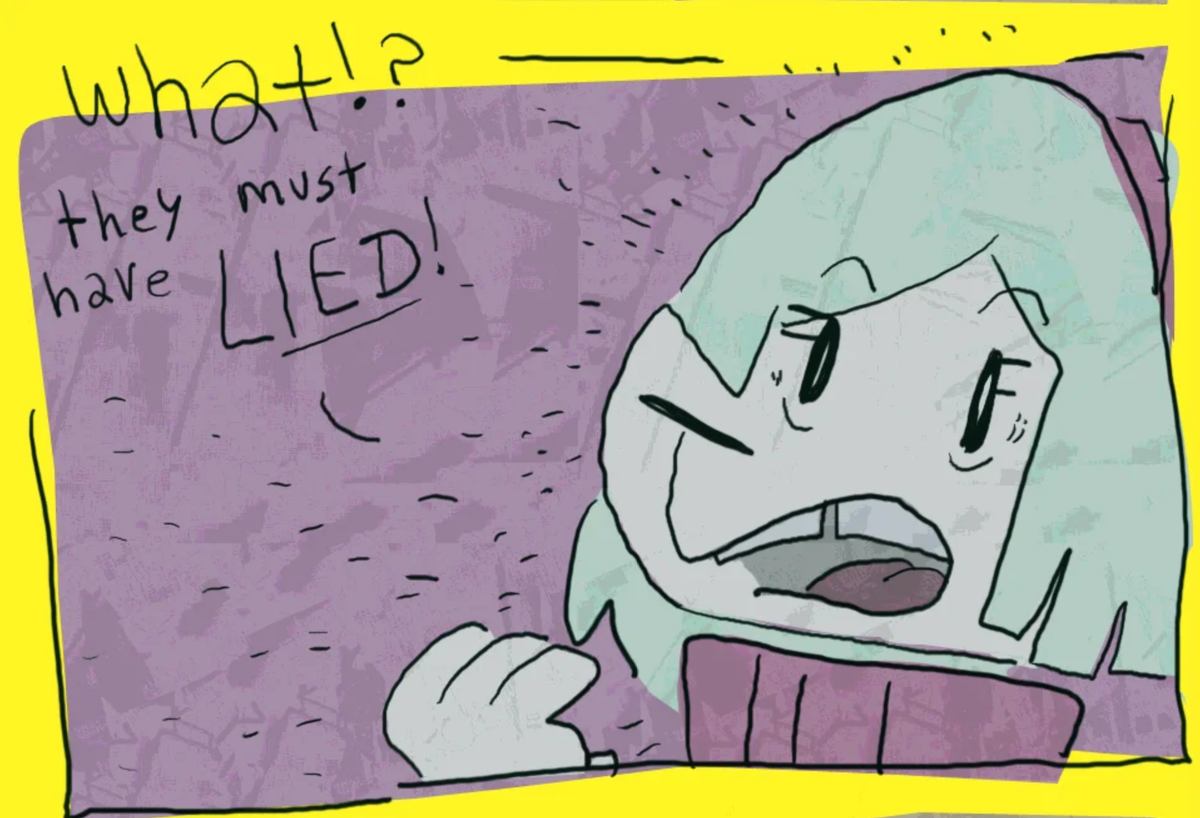
Innocence and pitiability ask the same arrogant question: “Why can’t everything be wonderful?”. Their difference arises from the aggression with which they ask the question. Innocence asks the question like an idle curiosity, for example “why not pick up this flower and poke my friends face with it?” Why not add a bit of wonder to the world. Pitability on the other hand asks “Why can’t everything be wonderful?” like a complaint. It is shown something non-wonderful and asks the question in defiance of what it sees. Under the pressure of the situation the pitiable one can pour all sorts of expression (tears, whining voice, feeling of pain in the heart) into the question in order to instil belief in the pitiable one and those around them that the question is still worth asking even in these hopeless and pitiable circumstances. Whereas innocence asks the question for the sake of bringing some wonderful experience into the world, pitiability becomes the experience of the question in the world for the sake of the wonderful.
Innocence and the unincorporation of evil
Innocence cannot use evil as an explanation or description in it’s worldview , because if it did it would no longer be innocence. Therefore any confusion directed toward a victimiser will only ever be a confusion at how the victimiser doesn’t understand the loss that is occurring. The victimiser always appears as a docile bystander in the eyes of the innocent — not an evil or bad person (as nothing can be explained by evil) — and the only problem with this bystander is their inability to notice the innocent joy being threatened. ‘Don’t you realise you are hurting it’ is the question the innocent asks the victimiser, never ‘why are you hurting it,’ because the innocent knows that there is no answer to the second question that makes sense. So even if a victimiser says ‘I am hurting it because I want to’ the innocent will move to attacking the victimisers understanding of the meaning terms ‘hurting’ ‘I’ and ‘want’ — but most certainly will never accept such a statement because the only description for such a statement would be ‘evil.’ Evil can never have an explanatory role in the mind of an innocent, and this goes as far as the innocent arrogantly determining that it cannot serve as an object of desire for others. Innocence will not even allow evil to serve as the final cause of a free will but will instead always believe that they simply don’t understand what they are willing.’
What is truly pitiable (Innocence and the indefinite confusion toward evil)
In making it impossible for evil to serve as an explanation, the response innocence instead has to the destruction of an innocent joy is indefinite and unresolveable confusion. This is what is truly pitiable: innocence demanding an answer it will never accept yet getting indefinitely and increasingly involved in its expression of the demand. There will never be a sufficient reason why everything can’t be wonderful.
To demonstrate what I mean by ‘truly pitiable’ take the example of two people losing the same innocent joy. The first person moves past pitiability because they come to accept the loss of the innocent joy: ‘these things happen’ — ‘not everything can be wonderful’. The second person however, can never accept or conclude anything. Perhaps they may forget or become distracted by other things, but they never turn their attention away from the loss of an innocent joy with the feeling as if their worldview is stable and everything was explained. The situation feels enduringly unresolved.
The first one pities the second one like we pity foolish people: the first one is tending towards a state that the second one has already transcended and ‘grown beyond.’ The first one appears to have access to the knowledge of more states the second — they both know what it’s like to to be confused or upset at the loss, but they also know what it’s like to have come to some conclusion about it and moved on. It is in this way that the first one knows why the second one doesn’t want to move on because the first one too enjoyed a world before the innocent joy was lost. Being innocent, the second one cannot understand the state of having ‘grown beyond’ the loss that the first one is currently in, and thusly becomes pitiable in an attempt to both steel their own belief in and confusion at the loss, and attempt to convince the first person of the loss as well. The first one feels pity at the second one’s permanent inability to go beyond innocence, and in this feeling of pity an ambiguity is opened up — the pity-er does not believe it is naivete alone that moves the pitiable to become pitiable as they do, for the pity-er too experience a small, vicarious taste of what it is like to be pitiable when they pity the pitiable one. They feel a tiny bit of what it feels like to be innocent when they observe the pitiable: to not be content with loss, to believe so indefinitely in the meaningfulness of the question of ‘why can't everything be wonderful.’ Perhaps with enough pitiability on the part of the second person, the first person might experience enough pity to fully convert to innocence.
Pitiability is not asking for consolation.
Many perhaps conceive of pitiability as ‘asking for consolation.’ When we see a sad child or dog, we say that we cuddle them to ‘make it better.’ But this is a mistake: pitiability is not asking for recompense… it does not want a hug to counterbalance the evil that was done. It wants a hug like it always wants a hug: because a hug is a beautiful and innocent joy. People hug innocents when they become pitiable not to make up for what happened to them, but simply because in the pitiable a person becomes extremely obviously innocent, and they produce the idea of innocence very clearly in the mind of whoever looks at them. Of course people relate to the pitiable affectionately — look at how responsive and supple they become in response to even evil![1] Look at how much they love innocent joy: so much that even in the face of evil they continue to ask for its existence. Who could be safer to hug? Who could appreciate my hug more than this paragon of innocence, the pitiable one?
It is the same reason an innocent wants a hug in pitiability that they want a hug in innocence: because hugs are warm, lovely and wonderful. Demanding such an innocent joy as recompense is to ask for an innocent joy as an instrument for removing the desire to ask the question ‘why can’t everything be beautiful’ of a lost innocent joy i.e. to pit the love of one present innocent joy against the love of another absent innocent joy. This is altogether roundabout and could only distract from the love of either innocent joy! The innocent already asks for innocent joys for the best and most perfect reason in the world — because innocent joys are wonderful.
Of hiding pitiability
Sometimes an innocent is assaulted by evil but conceals how indefinitely troubled they are with the existence of this evil in order to not appear a burden to others. But this very covering up of pitiability should be seen as a victory for evil. Evil wins against innocence when it makes the innocent feel that the innocent’s pitiability is a burden for the potential pity-er, rather than a blessing. This is because the process of pitying is a process of becoming innocent, for it is the process of coming to believe the loss of any innocent joy is worth indefinitely questioning by observation of the extent to which the pitiable expresses their confusion.
The only reason becoming innocent could be viewed as a burden is because an innocent feels stronger emotions when evil occurs, whereas someone non-innocent can easily ‘get over’ evil. But to someone truly innocent, becoming vexed in an indefinite manner was always the only response to evil, because innocence cannot conceive of a situation in which evil could make sense. Thusly someone truly innocent does not feel guilty for turning someone innocent with their pitiability, because they cannot understand how someone could even feel ‘weaker emotions’ in the face of evil.
Of the ambition to become pitiable
Becoming pitiable is a very strong power of innocence, which it can turn to in dangerous times. Evil threatens the indefiniteness of the question ‘why can’t everything be wonderful’ in its whimsical form by trodding on innocent whimsy (e.g. someone angrily yelling at children for playing a game of hide and seek in the park.) In a situation like this, evil becomes a problem for innocence, and — as problems are typically treated — it may appear as if it is time for the innocent to invent an answer like ‘evil’ as solution to the problem. Like evil might have cornered innocence into becoming a reality for the innocent (thus destroying innocence.) But at the crucial moment, instead of renouncing its idealism to create a place for evil in its heart, the question that evil presents for the innocent is denied an answer by the innocent simply asking the question more (more in the sense of both more times and more intensely ) — transitioning from it’s whimsical form to its complaint form. “WHY CAN’T EVERYTHING BE WONDERFUL!” the pitiable asks… until the evil-doer goes away, stops or comes to believe in the question. And the innocent doesn’t stop asking this question when the evil-doer goes away, but instead the question simply transforms again: from a complaint back into a whimsy: “What if now we played tips instead.”
Suffering exhaustively
Suffering is only truly suffering when absolutely none of the process of suffering from something unpleasant is diverted into resentment but the unpleasantness is simply suffering exhaustively. It is not suffering proper to interpret natural disasters as evil, because if one really suffered the disaster exhaustively, then everything unpleasant about the experience would have been experienced as suffering — not experienced through resentment. Unpleasantness does not become suffering different than unpleasantness (e.g. evil) and suffering means nothing to the sufferer except simply ‘the experience of something unpleasant.’ Resentment — the casting of the name evil onto something — is bypassed. One cannot resent suffering if one has suffered it without remainder.
Exhaustive suffering is the stance innocence takes towards suffering. Innocent people suffer properly, because innocence questions unpleasantness (as the loss of some innocent joy) indefinitely, and thusly the experience of suffering needn’t be deferred, because a conclusion about that which is suffered — which could mediate between the sufferer and that which is suffered — need not be reached. Exhaustive suffering is achieved when suffering does not become something different.
Suffering onto experience
On the other hand, we know that, although innocence does not stop asking its question (as there are always new possibilities for innocent joys or losses of innocent joys to direct it toward), an object of questioning can graduate questioning by becoming ‘something wonderful.’ In this sense the outcome of an interrogation can be the transformation of the object of questioning into a joyful version of itself, or the innocent becoming able to see something wonderful or beautiful in the object of questioning. When this occurs in regards to an object of suffering becoming an object of experience, we call it suffering onto experience.[2]
An example of suffering onto experience is cyclones. Perhaps at first humans resented cyclones, and for a long time the majority of the experience of cyclones was not of suffering the cyclone but resenting the cyclone. Perhaps it was only when we suffered the forces of nature to such a degree that we began to understand that cyclones arose from intense, low-pressure wind systems that we found them beautiful or innocent enough to simply experience them. But perhaps this was not enough: perhaps it took as long as learning that the reason why pressure systems even exist is because large masses possess a gravitational force which attracts surrounding mass toward it that we found cyclones to be innocent and beautiful emergent phenomena. Perhaps some people never resented cyclones. Even though the cyclone was destroying their livelihood, it was destroying it in such a majestic and blue manner that they would suffer the loss without resenting the cyclone, for they could find nothing in the cyclone itself to resent, but instead only beauty and innocence to experience. The point at which one finds the experience of a cyclone more wonderful than unpleasant is when one stops suffering from the cyclone and simply experiences it. It is in this way one suffers onto experience.
Note: One can suffer something whilst still considering it beautiful and innocent — there is nothing wrong with the feeling of pain existing in the world. Thus suffering onto experience is not an imperative, whereas suffering exhaustively would be if you wanted to live free of resentment.
Appendix 1: Innocence and the good
Evil is not opposed to the good but to the innocent. All acts are either evil or innocent, but there are some acts that are neither good nor evil. Thusly, evil contra innocence is a more exhaustive dualism than evil contra good. Good simply means ‘proactively opposed to evil.’
Innocence being associated with cowardice is incorrect: cowardice arises from fear. To retain innocence in the face of evil being done to another is not to bury one’s head in the sand but to be affected by the cruelty to the highest degree and mobilised to make it stop accordingly. This is what it means to indefinitely ask ‘why can’t everything be wonderful?’ In times of strife, the products of the asking of this question appear as negations of evil (e.g. ‘why not stop that criminal?’ ‘Ok let’s do it!’), in times of peace the products of the asking of this question appear as whimsies (e.g. ‘Why not roll down this hill?’ ‘Ok let’s do it!’). But both products emerge as consequences of asking the exact same question.
Why do some people then take the view that the ‘negations of evil’ (viewed as good) are more valuable than the ‘whimsies’ (viewed as innocent)? Because they find acts that are motivated by the ‘negation of evil’ as more tiresome and more necessary than acts motivated by innocence. The mistake here is that innocence can be just as motivated to ‘negate evil’ but in a tireless manner by conceiving of the negation of evil as just another innocent joy which falls under the innocent's indefinite curiosity ‘what everything could be wonderful.’
Someone who thinks in terms of ‘good and evil’ cannot simply ‘roll down a hill.’ They would always prefer to do something either evil, normal, or good instead. They either find ‘rolling down hills’ too boring (not as interesting as evil — this is a problem of subtlety in appreciation of innocence) or too embarrassing (not as humiliation-avoiding as normalness — this is also a problem of subtlety in appreciation of innocence) or not of sufficient priority. In the case of sufficient priority, goodness is identical to innocence, but those who think in terms of ‘good and evil’ may confuse higher-priority for higher-value. One can cook food for the hungry because it is good and/or because it is an innocent joy. The good choose to cook food for the hungry because there are people who are hungry in the world. The innocent choose to cook food for the hungry because they want to feed hungry people in a world. Innocence’s motivation is self-propelling and thus full-hearted. The good require the existence of evil as a motivating factor for the act and thus half-hearted.
There is thus nothing useful in the concept of good other than the concept of discerning priority between two innocent acts to determine which act one would like to do more immediately, but not which act is better (as one would like to do both acts absolutely — to an innocent, innocent joys are not mutually exclusive.)
People turn to systems of ‘good and evil’ systems simply because they are not innocent enough to desire ‘negations of evil’ and ‘whimsies’ with the exact same will. Thusly they need this concept by which, in an act of selflessness they deny their own desire and accept evil as a motivator for the sake of the negation of evil (goodness.) But in a system of innocence, net zero evil is achieved simply as a by-product of the indefinite pursuit of wonderfulness in both ‘negation of evil’ and ‘whimsical’ forms.
Appendix 2: Evil defined in terms of innocence
Evil is answering the indefinite question ‘why can’t everything be wonderful’ with ‘because evil exists.’ It should be noted that evil thusly begs it’s own question.
If pitiability is any different from innocence in regard to appearing hugworthy it is because it is innocence highlighted on the following accounts. 1. By involving more exaggerated expressions than other forms of innocence. 2. That it is placed in relation to evil, and is brought into sharp relief accordingly. 3. That it makes a matter of urgency out of innocence - one feels that the pitiable’s innocence is at risk and thus experiences a sense of urgency in affirming and bolstering the pitiable’s belief that everything can be wonderful by bringing wonderful things into the world before them and thus making the belief that everything could be wonderful more believable. ↩︎
The definition of suffering is simply experience with the specification that the object of experience be ‘something unpleasant.’ Thusly, suffering becoming experience is not suffering being deferred but rather that which is suffered becoming no longer understood as unpleasant. ↩︎